

When humidity spikes in Southwest Michigan, it’s tempting to crank the thermostat to 65. That feels great for a minute, but it strains your system and guarantees a painful bill. The best thermostat settings for summer balance comfort with efficiency, and they’re the easiest way to lower your AC energy bills.
The U.S. Department of Energy recommends 78°F (25°C) while you’re home and awake. It sounds warm, but a properly running system that dehumidifies well makes 78 feel comfortable, especially right after a summer AC maintenance tune-up.
Setting the thermostat to 65 does not cool your home faster than 72. Your AC cools at the same rate either way; it just runs longer to hit the lower number, wasting energy and adding wear that leads to early AC repair.
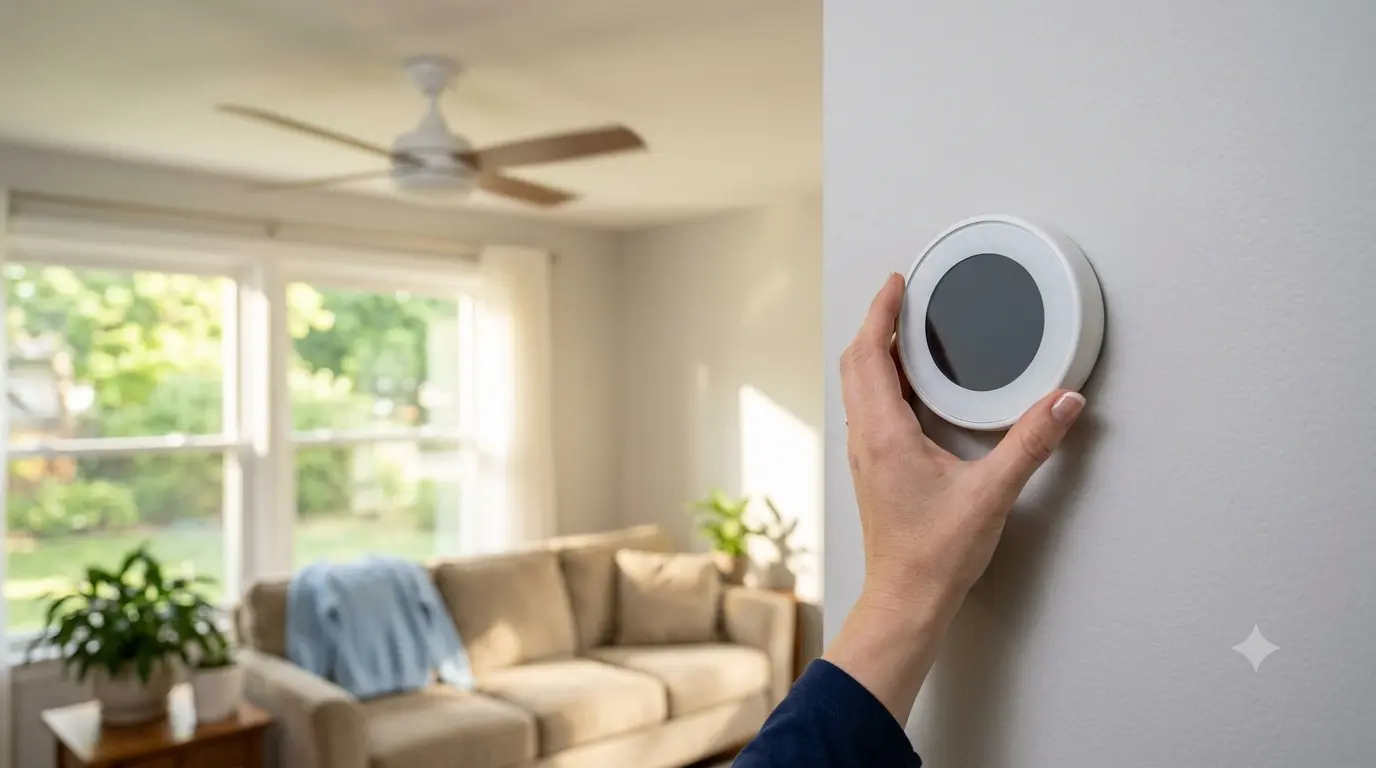
Managing these shifts by hand is tedious, so a programmable or smart thermostat is one of the best upgrades you can make. It learns your schedule and adjusts automatically when you leave for work in Charlotte or head to bed in Jackson; some models even factor in local weather.
Even perfect settings won’t help a struggling system. Keep yours ready with our AC maintenance, and remember that airflow matters too, so review how often to change your AC filter. For over 51 years J&J has helped homeowners stay cool efficiently across Southwest Michigan. schedule a visit or call (269) 965-1627.

It is almost always best to use the “Auto” setting.
When you select “On”, the system’s blower fan runs 24 hours a day, 7 days a week, regardless of whether the compressor is actively cooling the air. This leads to two major drawbacks:
Energy Waste: The fan motor consumes electricity continuously, which will noticeably inflate your monthly utility bills.
Moisture and Humidity Issues: When a cooling cycle ends, the AC’s evaporator coil is dripping wet with moisture removed from your home. If the fan keeps running, it will blow air over that wet coil, re-evaporating the water and pushing it right back into your living spaces, making your home feel humid and clammy.
The “Auto” setting only runs the fan when the system is actively cooling, which saves electricity and ensures your AC effectively dehumidifies your home.
It is much more efficient to adjust the temperature than to shut the system off completely.
There is a common misconception that turning the AC off when you leave for work saves money. However, if you turn it off completely during a hot day, heat and humidity build up heavily in your walls, furniture, and flooring. When you get home and turn it back on, the system has to work at maximum capacity for hours just to overcome that massive heat load, causing severe equipment strain and a spike in power consumption.
Instead, the ideal approach is to raise your thermostat by 7 to 10 degrees above your normal setting when you are away. This prevents your home from overheating and allows the AC to cool the house down quickly and efficiently when you return.
No, this is a dangerous myth that can harm your system.
Central air conditioning systems are precisely sized and balanced to move a specific volume of air throughout your entire home. Closing vents in unused rooms does not “redirect” cold air to other areas; instead, it restricts the overall airflow and disrupts the system’s internal pressure.
This pressure buildup puts extreme stress on the blower motor and drastically reduces the airflow moving over the evaporator coil. Without enough warm air passing over it, the coil can drop below freezing temperatures and freeze up completely, which can destroy your compressor—a very expensive part to replace. For a healthy system, you should always keep at least 80% of your home’s registers fully open.
Ready to upgrade to a smart thermostat and maximize your home’s efficiency? Call J&J at (269) 965-1627 or schedule your visit today.
Schedule service online or get in touch at (269) 965-1627 today!
9000 M-66 South • East Leroy, MI 49051
(269) 965-1627
Monday - Friday: 8:00am - 5:00pm
